Terminal blocks, power supplies, relays and small PLCs in a modern control cabinet mostly snap onto a single strip of metal. Drives have traditionally been the exception, bolted to the back plate through holes drilled for each model.
As drives have shrunk, DIN rail mounting has become an option for them too, and a technical team planning a panel now has to decide whether a compact inverter belongs on the rail or on the plate. Weight, heat, vibration and the way the cabinet will be serviced settle the question.
What the Rail Standard Provides
The rail most widely used in control panels is the 35 mm top-hat profile standardised in EN 60715. Components with a matching clip hook onto its upper edge and snap over the lower one, so they can be fitted or removed with nothing more than a screwdriver to release the latch.
Because the profile is common to many suppliers, devices from different sources line up along one rail at a fixed height, and wiring ducts above and below can be planned in advance.
DIN rail mounting therefore turns panel building into an assembly of modules instead of a sequence of drilling, tapping and fitting, and it makes later changes to the layout far easier. Rails also accept end stops, labels and cable supports from the same system, so the panel stays orderly as it grows.
Why Teams Prefer the Rail
Assembly time is where the rail pays off first. Drilling a back plate for each drive takes time and fixes the layout, whereas a rail allows units to be added, moved or replaced as the design evolves.
Machine builders who produce many similar panels gain the most, since one rail layout serves several product variants and a failed unit can be exchanged quickly during service. Spare drives can also be kept in stock without model-specific mounting kits, since the rail is identical throughout the plant.
Commissioning benefits as well. When a compact inverter sits in line with the I/O modules and power supply that serve it, wiring stays short and traceable, and a smart electric drive with parameter copying can be configured in sequence with the rest of the panel.
Where the Rail Reaches Its Limits
A rail clip is designed for modest loads. Heavier drives place a bending load on the rail and its fixing screws, and in machines with strong vibration a clip can work loose over time unless end stops and extra fixings are added.
Heat is the other limit, because drives packed closely on a rail share the same air, and units without a designed airflow path warm their neighbours. Rail orientation affects cooling too, and a horizontal rail with drives standing upright keeps air moving upwards through each unit. Above a certain size, back-plate mounting is simply the more robust choice.
Those limits mark out the space in which DIN rail mounting makes sense: small drives, moderate vibration, and a product designed to tolerate close spacing. FRECON’s FR01 smart inverter is built for that space, with three enclosure sizes of 65 × 170 × 140 mm, 75 × 190 × 150 mm and 90 × 245 × 165 mm in width, height and depth, selected by model.
How a Rail-Ready Drive Is Designed
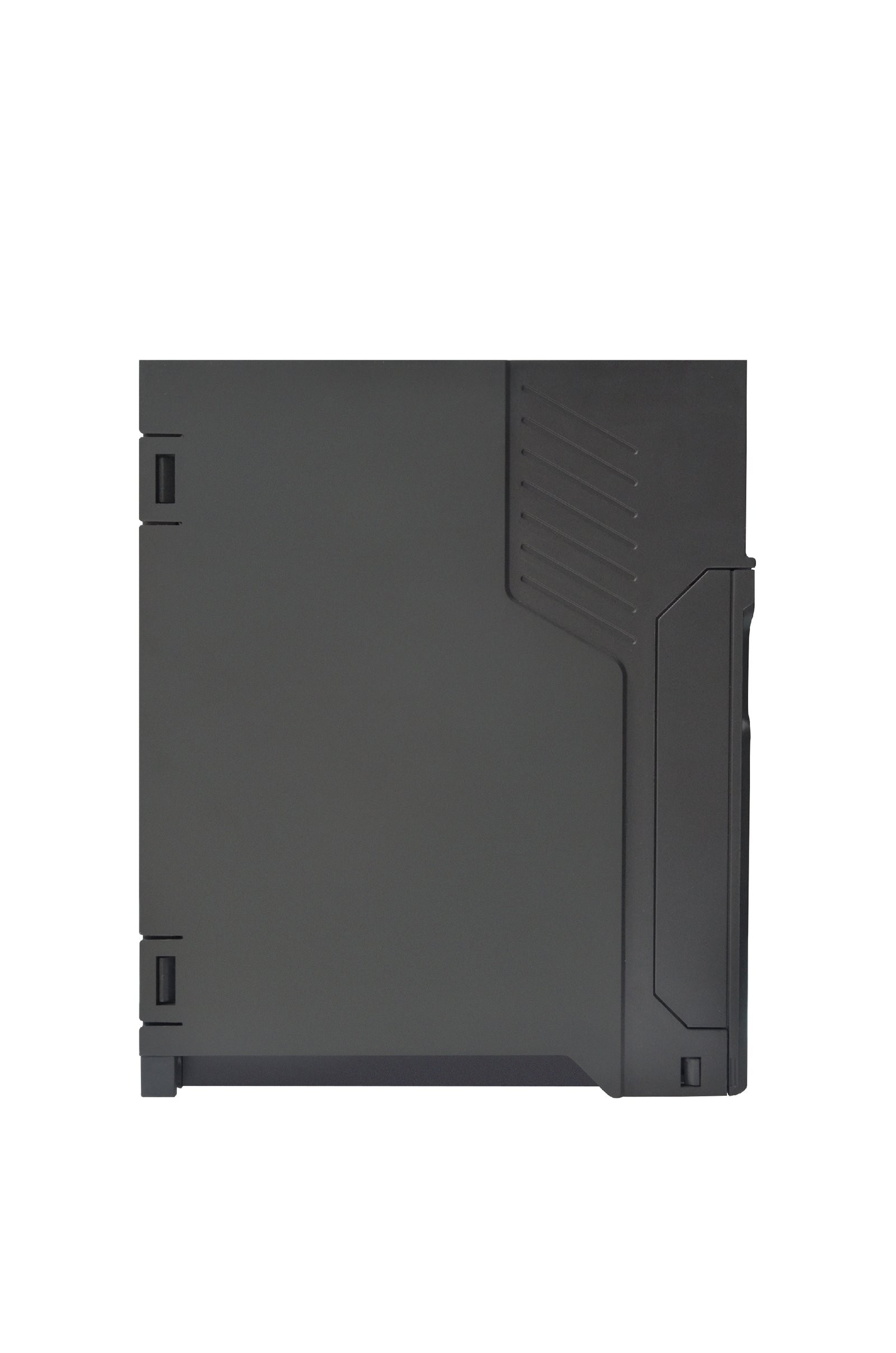
Fitting onto a rail is only half the design, because the drive also has to stay cool and accessible when its neighbours sit right beside it. The FR01 from FRECON answers that requirement with an independent air duct inside a narrow book-style body, which allows units to stand side by side with zero spacing on a standard rail. Parameter copying and batch setup reduce the effort of configuring many identical units, which counts most when a smart electric drive is installed in quantity.
Ratings stay within the range where rail mounting is practical. Power ratings stop at 4 kW for single-phase 220V supplies and at 7.5 kW for three-phase 380V, starting from 0.4 kW and 0.37 kW respectively, and the enclosure is IP20 with forced-air cooling.
Supply tolerance is −15% to +20% for the single-phase models and −15% to +30% for the three-phase models, which suits plants where mains voltage varies. A narrow body, its own air path and copyable settings, combined with these modest ratings, are the features that let a compact inverter in this class share a rail safely.
Rail or Back Plate
The decision follows a few checks. If the drive falls within a rail-mountable size, the machine’s vibration is moderate, and the product is designed for close spacing with its own airflow path, the rail saves assembly and service time.
If the drive is heavy, the cabinet runs hot or vibration is severe, the back plate remains the safer place, and a mixed panel with small drives on the rail and larger ones on the plate is entirely normal.
Environmental limits apply either way. FRECON specifies the FR01 for indoor use away from direct sunlight, corrosive or flammable gases, oil mist, water vapour, water droplets and salt, at −10 to 40°C with derating above 40°C and at altitudes up to 2000 m with 1% derating per 100 m above 1000 m. Respecting those limits, a technical team can put a smart electric drive on the rail and gain the speed of modular assembly without giving up reliability.
