In today’s fast-paced tech landscape, embedded and edge systems are becoming smarter and more capable. Industries like industrial automation, smart retail, and IoT demand solutions that deliver robust computing power while keeping energy consumption low. Striking this balance is crucial because devices often run in environments with limited power and cooling resources. Geniatech’s System on Module solutions excel at meeting these demands, offering high-performance ARM computing combined with intelligent power-saving features tailored for real-world embedded applications.
1. What Is a System on Module?
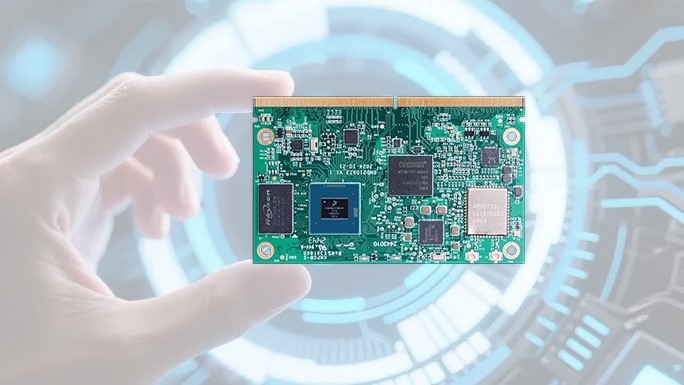
A System on Module, or SoM, is a compact, integrated board containing core computing components such as the CPU, memory, and essential interfaces. Unlike a bare chip, SoMs provide a ready-to-use platform that simplifies the design and development of embedded systems. Their modularity allows developers to focus on application-specific features, speeding time to market while ensuring reliability and scalability. Geniatech’s SoMs are designed for diverse use cases, enabling flexible deployment across various industries.
The Power-Performance Trade-Off in Embedded Design
Embedded devices face a classic engineering challenge: increasing processing power typically leads to higher energy consumption and heat generation. This trade-off is especially apparent in edge AI, industrial IoT gateways, and digital signage, where devices must run complex workloads continuously yet stay within strict power envelopes. Designing for power efficiency without compromising performance requires meticulous hardware and software co-optimization—a challenge Geniatech SoMs tackle head-on.
ARM Architecture: Designed for Efficiency and Scalability
ARM processors have become the preferred choice for embedded applications because of their inherent power-efficient design. ARM’s multi-core architecture supports heterogeneous computing, allowing cores to run at different frequencies or enter low-power states dynamically. This flexibility ensures that the system delivers the right amount of computing power when needed while conserving energy during idle or low-demand periods. Geniatech leverages these ARM architectural strengths to provide SoMs that adapt to a variety of performance and power requirements.
Inside Geniatech SoMs: Optimizing for Both Performance and Power
Geniatech’s SoMs, including popular models like the SOM-3576, SOM-iMX93-OSM, and those based on RK3576 and i.MX93 processors, embody a balanced design approach. These modules incorporate high-efficiency ARM CPUs paired with advanced GPU and NPU accelerators to handle compute-heavy tasks like AI inference or multimedia processing efficiently. By carefully selecting components and optimizing system integration, Geniatech ensures these SoMs deliver peak performance while staying within manageable power and thermal limits.
Advanced Power Management Techniques in Geniatech SoMs
Power efficiency in Geniatech SoMs is not an afterthought—it is engineered deeply into both hardware and software layers. Techniques such as dynamic voltage and frequency scaling (DVFS) allow the processor to adjust power use on the fly based on workload. Efficient thermal design reduces cooling requirements and improves reliability. Low-power suspend and resume modes enable devices to conserve energy during downtime without sacrificing responsiveness. Additionally, peripherals and I/O interfaces are managed intelligently to minimize unnecessary power draw.
Performance Highlights: Real-World Application Benchmarks
In practical applications, Geniatech SoMs demonstrate strong performance with sensible power consumption. For instance, AI inference tasks on the ARM-based modules show competitive throughput while maintaining power usage well below 10 watts. Multimedia decoding and image processing are similarly optimized, enabling smooth video playback and camera analytics with minimal energy costs. These real-world metrics prove that high performance does not have to come at the expense of energy efficiency.
The Role of Form Factors: SMARC, OSM, and Beyond
Standardized form factors like SMARC and OSM modules play a vital role in optimizing power and thermal characteristics. These standards define mechanical, electrical, and thermal interfaces that make system integration more predictable and efficient. By adhering to these widely adopted formats, Geniatech SoMs facilitate easier design iterations and upgrades, helping customers deploy solutions faster with confidence that power and cooling requirements are met consistently.
Scalability Across Use Cases: From Edge AI to Industrial Automation
Geniatech SoMs serve a broad spectrum of markets, from resource-constrained edge sensors to high-performance industrial gateways. Their flexible architecture allows customers to choose modules that fit their specific needs, scaling computing power up or down without redesigning the entire system. This versatility is critical for companies developing AI-enabled smart factories, autonomous devices, or energy-efficient digital signage.
Developer Ecosystem and Software Optimization
Hardware alone doesn’t guarantee power efficiency—software optimization is equally important. Geniatech supports developers with power-aware Board Support Packages (BSPs), AI framework acceleration (such as TensorFlow Lite), and kernel-level tuning to reduce overhead. This software ecosystem ensures that devices built on Geniatech SoMs leverage full power-saving features while maximizing application performance.
Conclusion: Why Balance Matters More Than Ever
In modern embedded and edge computing, delivering high-performance ARM computing with power efficiency is no longer optional—it’s essential. Geniatech’s SoMs achieve this balance through smart hardware choices, advanced power management, and comprehensive software support. Whether in AI inference, multimedia, or industrial control, these modules enable businesses to deploy robust, energy-conscious solutions that meet today’s demanding use cases and scale with tomorrow’s innovations.
